(And Why a Family of Four Can Save Hundreds Every Year)

At Mila Earth, this conversation is not just about saving money — although the savings are very real.
It’s also about understanding ingredients.
When you know what goes into your household cleaners, you naturally reduce exposure to known carcinogens, hormone disruptors, and synthetic fragrances that are commonly found in conventional cleaning products. Many families unknowingly use these substances daily — on counters, floors, dishes, and laundry — where they linger in the air and on surfaces.
Learning how to make your own cleaners gives you control, clarity, and confidence. You’re no longer relying on marketing claims — you’re working with ingredients you recognize, understand, and trust.
The Problem With Modern Household Cleaners
Most commercial cleaners rely on:
- Synthetic surfactants
- Artificial fragrance blends
- Preservatives and stabilizers
- Vague terms like “plant-based” or “natural”
Even many “green” or MLM-style cleaners still contain:
- Harsh detergents
- Sensitizing fragrance compounds
- Proprietary blends you can’t evaluate or replicate
When you don’t know how something works, you have to keep buying it.
The Mila Earth Approach: Fewer Products, More Knowledge
We teach a simple, ancestral model:
- Learn how soap actually cleans
- Use basic kitchen ingredients
- Make multi-purpose products
- Stop buying specialty bottles
This same philosophy applies to body care.
When you learn to make magnesium soap or a basic soap bar, you can use that same knowledge to create:
- Dish soap
- Laundry soap
- Household cleaners
One skill replaces dozens of products.
What a Typical Family of Four Spends on Cleaners Each Year
(unchanged section retained)
➡️ $325–$660 per year
Premium or MLM brands often exceed $1,200 annually.
What It Costs to Make Your Own Household Cleaners
(unchanged section retained)
➡️ $100–$160 per year
Annual Savings: DIY vs Store-Bought
➡️ $225–$500 saved every year
➡️ $1,125–$2,500 saved over five years
And that doesn’t include reduced chemical exposure or plastic waste.
Safe & Effective DIY Cleaner Recipes
(Text version — no image needed)
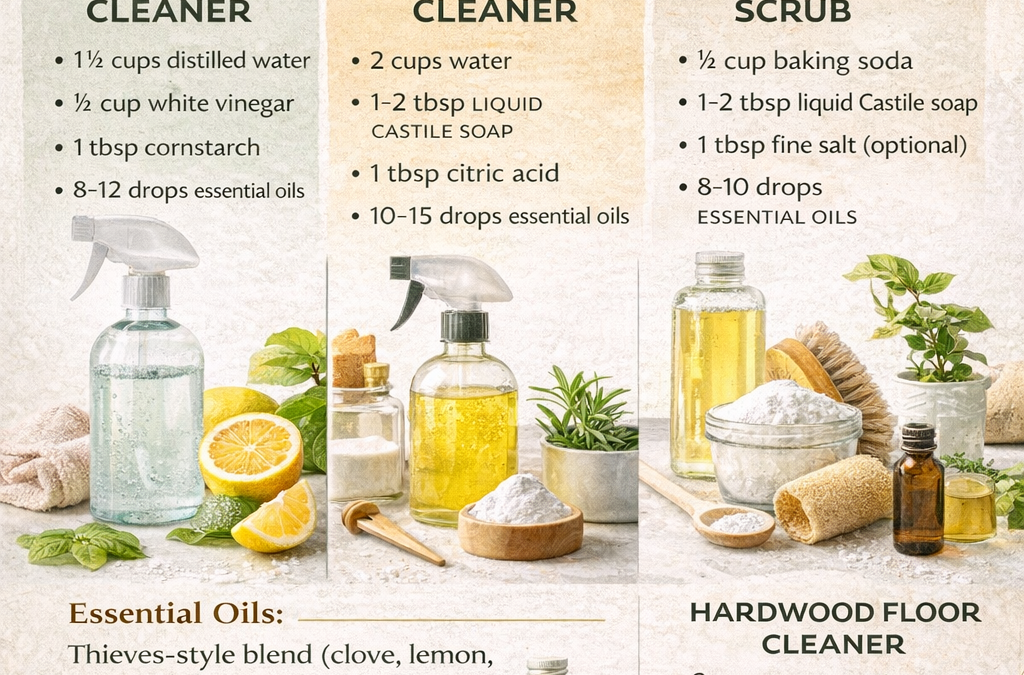
🧼 ALL-PURPOSE HOUSEHOLD CLEANER
Ingredients
- 2 cups water
- 1–2 tbsp liquid Castile soap
- 1 tbsp citric acid (optional, for hard water)
- 10–15 drops essential oils (Thieves-style or citrus)
🪟 WINDOW & GLASS CLEANER (Streak-Free)
Ingredients
- 1½ cups distilled water
- ¼ cup white vinegar
- 1 tbsp cornstarch
- 8–12 drops essential oils (lemon or citrus)
Shake before use. Wipe with microfiber.
🧽 SINK & TILE SCRUB (No Vinegar)
Ingredients
- ½ cup baking soda
- 1–2 tbsp liquid Castile soap
- 1 tbsp fine salt (optional)
- 8–10 drops essential oils
Creates a thick paste or scoopable scrub.
🌳 HARDWOOD FLOOR CLEANER
Ingredients
- 2 cups warm water
- 1 tbsp liquid Castile soap
- 1 tbsp olive oil or jojoba oil
- 5–8 drops essential oils
Use a lightly damp mop only.
🧴 DEEP CLEAN / BLEACH-FREE DISINFECTING SPRAY
(Hydrogen Peroxide)
For times when you need extra sanitation — bathrooms, cutting boards, garbage bins — hydrogen peroxide is safe and effective when used correctly.
Ingredients
- 1 cup 3% hydrogen peroxide
- 1 cup water
Optional
- A few drops of essential oil after spraying (not mixed in)
Important Notes
- Use in a dark spray bottle
- Do not mix with vinegar
- Safe for deep cleaning and whitening
- Breaks down into oxygen and water
Why Workshops Matter (Soap, Magnesium & Skills)
When you attend a Mila Earth magnesium soap workshop or basic soap-making class, you learn:
- Why soap works
- How to customize it
- How to replace multiple products
- How to stop relying on commercial cleaners
Once you understand soap, you are free.
This Is About Empowerment, Not Perfection
We don’t believe everyone needs to make everything from scratch.
But we do believe:
- You should understand what you’re using
- You should know how to replace it
- You should keep more money in your home
Making your own cleaners isn’t extreme — it’s practical, ancestral, and deeply modern.
Learn More
🌿 milaearth.com
Visit our blog for non-toxic living, magnesium education, soap workshops, and simple wellness tools.

Related Reading
- You Don’t Need Imported Matcha — Spring Is Growing One Right Outside
- Foraging Your Own Teas: Get Outside, Heal, and Save!
- Rowanberry: The Forgotten Antioxidant Berry Growing Around Us