

You can have a “normal” blood test
and still be profoundly magnesium insufficient.
That’s the conversation most people aren’t having.
Magnesium is not primarily a blood mineral.
Less than 1% of total body magnesium circulates in serum. The rest is stored in bone, muscle, and soft tissue. Your body protects blood levels aggressively — because magnesium is critical for heart rhythm stability.
If serum magnesium drops too low, cardiac rhythm becomes unstable. So the body will pull magnesium from tissues to keep blood levels stable.
By the time serum magnesium appears low, tissue depletion may already be significant.
The question isn’t just:
“What does my blood test say?”
It’s:
“What are my tissues doing?”
Where Magnesium Lives
Approximately:
• ~60% in bone
• ~20% in muscle
• ~19% in soft tissues
• <1% in blood
Standard blood tests reflect only circulating magnesium — not tissue status, not intracellular magnesium, and not long-term storage.
That’s why some integrative and functional practitioners also explore:
• Red blood cell magnesium
• Hair mineral analysis
• Symptom tracking over time
Hair analysis does not directly measure bone magnesium — but it can provide insight into mineral patterns over a longer window than a momentary blood draw.
And patterns matter.
Magnesium: 300–600 Biochemical Reactions… and Beyond
Magnesium directly participates in over 300 enzymatic reactions in the human body. Some research estimates approach 600, depending on classification methods.
But that reaction count only tells part of the story.
Magnesium is a required cofactor in foundational systems — and those systems influence thousands of downstream biological functions.
Magnesium participates in:
• ATP production (cellular energy)
• DNA synthesis and repair
• Protein synthesis
• Methylation pathways
• Vitamin D activation
• Calcium channel regulation
• Neurotransmitter production
• Stress hormone signaling
• Collagen formation
• Insulin signaling
Because these systems branch into complex biochemical cascades, magnesium’s regulatory reach influences thousands of cellular actions indirectly.
It does not independently “control 3,500 separate processes.”
But by stabilizing primary regulatory systems, its downstream impact is extensive.
Magnesium isn’t just about relaxing muscles.
It’s about stabilizing metabolism.
Magnesium & Methylation
Methylation is one of the most critical biochemical processes in human physiology. It influences:
• Gene expression
• Detoxification pathways
• Neurotransmitter production
• Hormone metabolism
• DNA protection
• Inflammatory balance
Magnesium serves as a cofactor in enzymes that support methylation-related reactions.
Without sufficient magnesium:
• Vitamin D activation may be impaired
• Neurotransmitter production can become inefficient
• Stress signaling may amplify
• Tissue repair may slow
When methylation becomes inefficient, people often report:
• Brain fog
• Mood instability
• Fatigue
• Hormonal shifts
• Poor sleep
• Slower recovery
Magnesium is not a cure for these experiences.
But insufficient levels may impair the systems that regulate them.
Vitamin D, Collagen & Structural Integrity
Magnesium is required for converting vitamin D into its active hormonal form.
Without magnesium, vitamin D supplementation may not yield optimal physiological benefits.
Magnesium also participates in enzymatic reactions that support collagen synthesis.
Collagen supports:
• Skin elasticity
• Vascular integrity
• Joint structure
• Connective tissue resilience
• Organ architecture
As mitochondrial efficiency declines with age and oxidative stress increases, magnesium’s role in ATP production and cellular repair becomes increasingly relevant.
Aging is complex.
Magnesium does not stop aging.
But it supports the biological systems that buffer against accelerated decline.
Nervous System: Calcium vs. Magnesium
Calcium excites.
Magnesium stabilizes.
Magnesium helps regulate:
• NMDA receptor activity
• GABA signaling
• Calcium influx into cells
When magnesium is low, calcium can dominate intracellular signaling. That can amplify stress response and sympathetic drive.
People may report:
• Shallow sleep
• Increased muscle tension
• Heightened stress reactivity
• Difficulty recovering after stress
Magnesium does not sedate the nervous system.
It supports physiological balance.
And parasympathetic balance is where recovery happens.
Inflammation & Immune Regulation
Magnesium status has been associated in research with inflammatory marker patterns.
Low magnesium levels have been linked with:
• Elevated inflammatory markers
• Increased oxidative stress
• Altered immune modulation
Autoimmune conditions such as arthritis are complex and multifactorial. Magnesium is not a treatment.
But mineral sufficiency may support broader inflammatory regulation and tissue resilience.
Inflammation is rarely caused by a single trigger. It often reflects cumulative stress, metabolic inefficiency, mineral imbalance, and lifestyle load.
The Transdermal Magnesium Debate
Transdermal magnesium remains debated in scientific literature.
Some studies report minimal absorption through intact skin.
Others suggest measurable changes in magnesium markers with sustained topical application.
One important nuance: not all studies test the same compound.
Many transdermal absorption studies use magnesium sulfate (commonly known as Epsom salt).
Magnesium sulfate and magnesium chloride are chemically distinct.
Magnesium chloride:
• Occurs naturally in seawater
• Is highly soluble
• Has different ionic characteristics
Magnesium sulfate:
• Is chemically distinct
• Often lab-manufactured
• Contains less elemental magnesium per gram
Grouping all forms under a single “minimal absorption” conclusion oversimplifies the chemistry.
The Funding Reality
Large randomized controlled trials require significant funding.
Typically, such funding comes from industries with commercial incentives — often pharmaceutical or supplement manufacturers who profit from patentable oral formulations.
Magnesium chloride sourced from seawater or natural deposits is not patentable.
Ocean immersion cannot be commercialized at scale in the same way an oral capsule can.
That does not prove suppression.
But it does explain why certain delivery methods receive less large-scale research investment.
Absence of a $10 million double-blind trial is not proof of ineffectiveness.
Often, it reflects funding priorities.
This is not conspiracy.
This is research economics.

The Study That Hasn’t Been Done
An ideal study would:
• Compare high-quality oral magnesium (e.g., malate, glycinate, L-threonate)
• Compare magnesium sulfate baths
• Compare magnesium chloride oil
• Compare magnesium chloride body butter
Over 6–12 months.
Measure:
• Serum magnesium
• Red blood cell magnesium
• Hair mineral patterns
• Inflammatory markers
• Vitamin D activation
• Symptom tracking
• Sleep quality
• Nervous system markers
That comprehensive long-term study has not yet been performed at scale.
Until then, definitive absorption percentages remain speculative.
The Case Example
The client example above used:
• Magnesium chloride baths
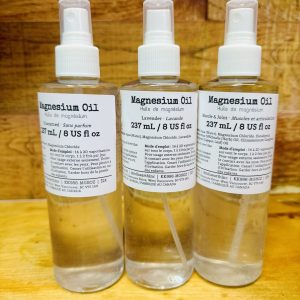
• Magnesium oil
• Magnesium body butter
Consistently for six months.
Hair mineral analysis showed elevated magnesium patterns compared to baseline.
Does that prove transdermal absorption universally?
No.
But it is a data point.
And repeated experience across many users warrants continued curiosity — not dismissal.
Why Testimonials Matter
When large-scale funding is limited, longitudinal user feedback becomes meaningful.
Testimonials are not replacement for trials.
But when consistent patterns appear across thousands of individuals — improved sleep, reduced muscle tension, better stress resilience — they deserve thoughtful consideration.
Science evolves.
Experience informs.
The two must coexist.
Could You Be Insufficient?
Common experiences associated with magnesium insufficiency include:
• Muscle tightness
• Stress sensitivity
• Poor sleep quality
• Brain fog
• Hormonal instability
• Slower recovery
• Fatigue
These experiences do not diagnose deficiency.
They invite investigation.
Supporting Magnesium Status
Common approaches include:
• 14–20 sprays magnesium oil daily
• Magnesium body butter applied to feet, hips, shoulders at night
• 1–2 cups magnesium chloride flakes in a warm bath
• Adequate vitamin D levels
• Whole-food nutrition
• Stress regulation
Magnesium functions best within a complete lifestyle system.
Light exposure. Sleep consistency. Mineral balance. Reduced stress load.
Magnesium is foundational — not fashionable.
Final Perspective
Magnesium directly participates in hundreds of biochemical reactions — and through foundational systems like ATP production and methylation, influences thousands of downstream processes.
Blood levels do not always reflect tissue sufficiency.
Modern life depletes minerals:
• Soil depletion
• Refined water
• Chronic stress
• Environmental burden
• High caffeine intake
The better question may not be:
“Is my blood magnesium normal?”
But:
“Is my system resilient enough to recover?”
Magnesium is not a miracle.
It is a foundational mineral in a mineral-depleted world.
And foundational systems deserve attention.
If you think you might be running low, our Magnesium Oil and the rest of our magnesium collection are an easy place to start topping back up.
Related Reading
- 🏋️♀️ How Athletes Are Using Magnesium for Recovery (And Why This Isn’t New)
- Everyone’s “getting sick” right now… but what if it’s not the flu?
- The Carpenter Who Was Told He Needed Spinal Fusion — And Why It Never Happened