There is an old British legend I absolutely love—partly because it sounds ridiculous until you realize the water at the centre of it is very real.
More than 2,000 years ago, a young prince named Bladud was said to have developed leprosy.
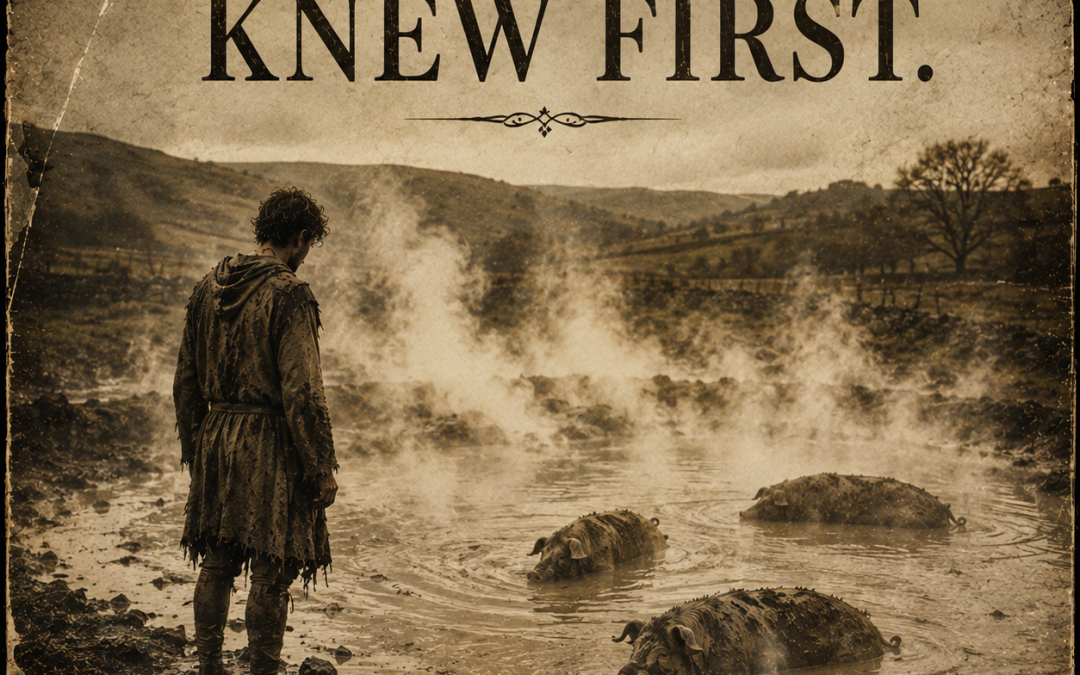
He was cast out and eventually found himself tending pigs in the countryside.
Then he noticed something strange.
Some of his pigs had terrible skin problems, yet they kept disappearing and returning covered in warm, black mud.
So one day, he followed them.
They led him to a place where steaming water was bubbling naturally from beneath the earth.
The pigs climbed in.
They rolled in the warm mud.
And according to the legend, their skin began to improve.
Bladud looked at the pigs.
Then at his own diseased skin.
And did the only logical—or perhaps completely crazy—thing left to do.
He got in too.
The legend says Bladud returned to those waters again and again until his skin healed. He eventually returned home and became king.
And the place where those pigs supposedly discovered the water?
Bath, England.
Now, Bladud’s miraculous cure belongs to legend.
But the water does not.
Those springs are still flowing.
In fact, around 1.3 million litres of mineral-rich thermal water rise beneath Bath every single day.
The story of where that water comes from is almost as fascinating as the legend.
Rain falls on the surrounding hills and travels down through limestone. It journeys deep underground—potentially kilometres beneath the surface—where it is naturally heated before finding fractures in the rock and being forced back toward the surface.
By the time it emerges in Bath, the water can be 40°C or hotter and carries dissolved minerals acquired during its underground journey.
The Romans encountered these springs and built an extraordinary bathing complex around them.
But here’s where the story becomes even more interesting.
People didn’t stop coming when the Romans left.
For centuries, people travelled to Bath specifically for their health.
They called it “taking the waters.”
And we actually have medical records.
In the 1700s, Bath physician Rice Charleton studied patients treated at Bath General Hospital and published work specifically investigating the waters for paralysis.
Hospital records covering more than a decade listed 1,053 patients suffering from different forms of palsy and paralysis.
Of those, 813 were recorded at the time as having been “cured and benefitted.”
One documented patient was a 60-year-old man named Richard Davis who had lost movement and much of the sensation on his left side following what was described as an apoplectic attack.
He drank the Bath water and bathed in it.
His treatment also included other therapies, so we can’t say the water alone cured him.
But his physician recorded substantial improvement and eventually discharged him as free of his complaint.
That’s extraordinary history.
It is also important to understand it correctly.
These aren’t modern controlled clinical trials, and some of the “palsies” treated in Bath may actually have resulted from things like lead poisoning, which was surprisingly common at the time.
But the records tell us something fascinating:
People weren’t merely telling stories about these waters.
Doctors were studying them. Hospitals were treating people with them. And physicians were recording what happened.
Historically, mineral spas were sought for an enormous range of complaints—gout, rheumatic conditions, skin diseases, injuries, digestive complaints and nervous-system disorders among them.
That doesn’t mean mineral water has been proven to cure all of those diseases.
It means humans observed something strongly enough that entire medical traditions, hospitals and even cities developed around mineral springs.
And eventually we learned to analyze what these waters actually contained.
Mineral-rich thermal waters aren’t simply hot tap water.
They carry dissolved compounds picked up as water travels through rock deep beneath the earth.
And that brings me to the mineral I’ve spent almost two decades talking about:
magnesium.
Long before supplements, wellness trends and beautifully packaged bottles, human beings sought oceans, salt lakes, hot springs and mineral baths.
They couldn’t explain mineral chemistry.
They simply noticed how their bodies felt afterward.
Maybe mineral bathing isn’t something modern wellness culture invented at all.
Maybe it’s something we forgot.
And perhaps those pigs figured it out first. 🐖🌊
If there isn’t an ancient English thermal spring conveniently bubbling up in your backyard, we’ve made bringing magnesium into your own ritual considerably easier.
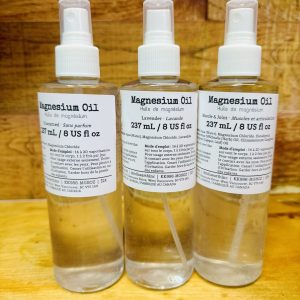
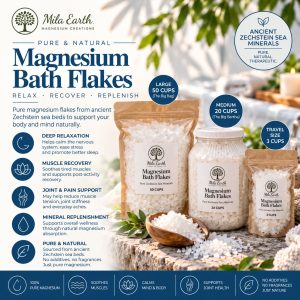
At Mila Earth, you can put magnesium chloride Bath Flakes into your water, apply Magnesium Oil to your skin, or use our Magnesium Body Butter as a leave-on body-care option.
The mineral is ancient. The ritual is ancient. We’ve just made it easier to bring home.
Explore Mila Earth → milaearth.com
#AncientWisdom #Magnesium #MineralBathing #HotSprings #MilaEarth

Related Reading
- Magnesium Chloride vs Supplements: How It’s Made, Who Profits — and Why Deficiency Persists
- The Carpenter Who Was Told He Needed Spinal Fusion — And Why It Never Happened
- Mila Earth: Magnesium Body Care That Works Like Mineral Therapy