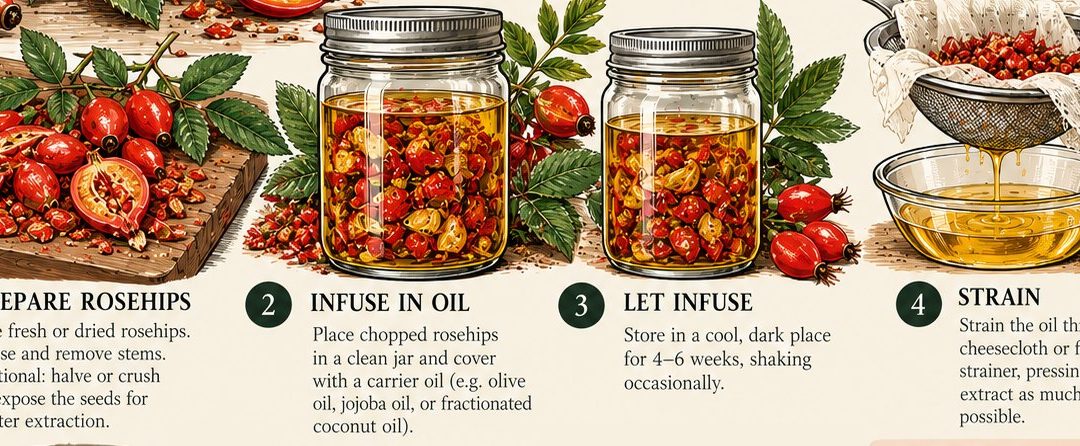
The roses have dropped their petals, the air has that crisp edge to it, and if you look closely as you walk through the gardens and parks right now, you will see them everywhere: bright red rose hips, glowing like little lanterns on bare branches. Under the big trees, shiny horse chestnuts are tumbling out of their spiky shells. Fall is not the end of the foraging season. It is one of the most generous times of the year.
Here are a few things I am gathering right now, and how I turn them into teas, oils and salves in my own kitchen.
A note before you pick
I only forage where I know the plants have not been sprayed. Roadsides, manicured lawns and some city gardens are often treated, so I go to wild spots, my own garden and places I know well. Always be 100% sure of what you are picking, take only what you need, and leave plenty for the birds and the next forager.
Rose hips: the little red multitaskers
Rose hips are the fruit the rose leaves behind once the flowers fall, and they are wonderfully versatile.
Rose hip tea
Simply dry your rose hips (in a low oven, a dehydrator or a warm spot in the house), then grind them and steep them in hot water. Enjoy them on their own or blend them with other herbs you love. One tip: rose hips have tiny hairs around the seeds that can be scratchy, so strain your tea through a fine cloth or a coffee filter.
Rose hip infused oil
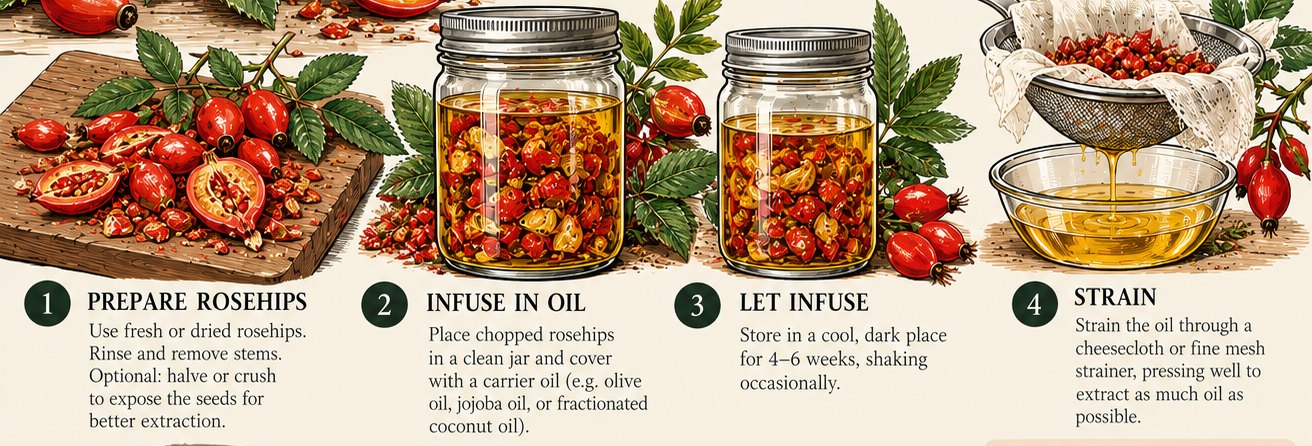
- Place your fresh rose hips in a mortar and cover them with a piece of wax paper. Crush and macerate them through the paper. The paper keeps all those precious oils from escaping as you work.
- Put the crushed hips in a clean jar and cover them completely with a carrier oil such as avocado or sweet almond oil.
- Now choose your method:
- Cold infusion: close the jar and let it sit in a cool, dark place for 4 to 6 weeks, shaking it gently every few days.
- Warm infusion: set the jar in a gentle water bath (a double boiler on the lowest heat) for a few hours. Heat speeds up the process and draws out beautiful colour.
- Strain through a fine cloth, bottle it, and you have your own rose hip oil.
You can use it just as it is, or turn it into a salve by gently melting in some beeswax.
Horse chestnuts: soap from the sidewalk
This time of year the horse chestnuts are falling everywhere, and they are one of my favourite fall gifts. A quick reminder: horse chestnuts are not the same as the sweet chestnuts you roast, and they are not for eating. They are for washing and for the skin.
Natural laundry soap
Peel the chestnuts, chop or grate them, and soak them in water. The water turns milky and soapy thanks to the natural saponins inside. Strain it and use it as a gentle, natural laundry liquid.
Horse chestnut infused oil and salve
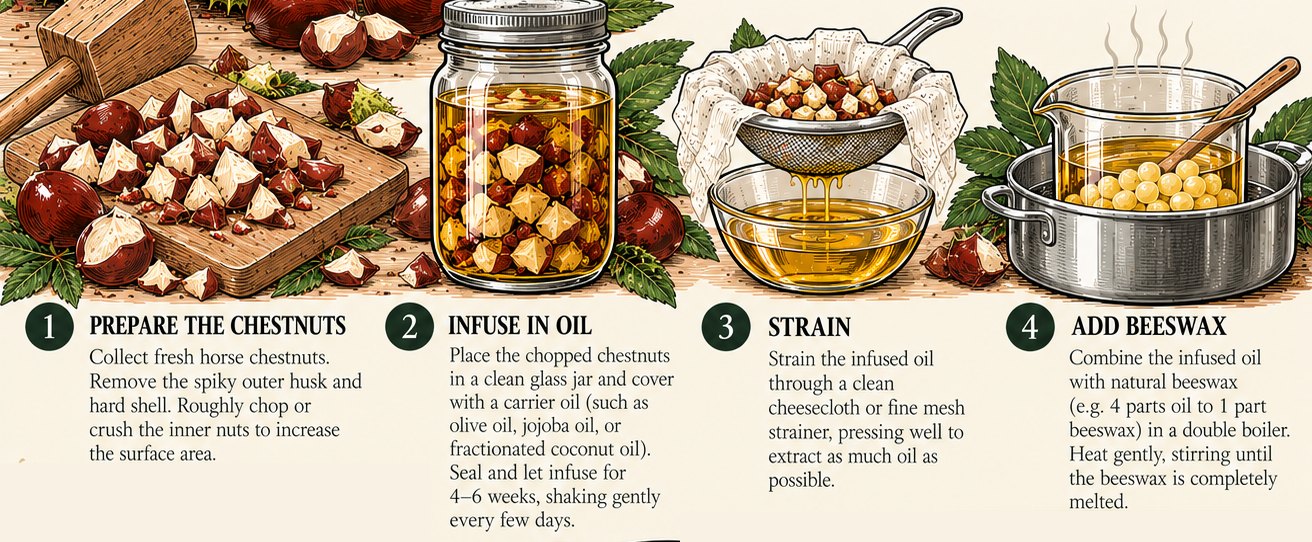
Macerate the chestnuts and infuse them in oil exactly the way you would with rose hips, then strain. Melt in some beeswax and you have a rich salve that I love massaging into knees, hips and hard-working joints at the end of a long day. My grandmother made salves just like this, and they have been part of European folk traditions for generations.
The red mushroom (look, admire, and learn first)
You may also spot the famous red mushroom with white spots, Amanita muscaria, popping up under the birches and conifers. It is toxic and must never be eaten. In some old traditions it was dried and slowly infused in oil for an external rub, but this is one for experienced foragers only. Several deadly Amanitas grow here in BC too, so please never pick a wild mushroom unless an expert has confirmed it. If you would like to learn about this tradition properly, come and ask me at the market or join one of my workshops.
Combining forces
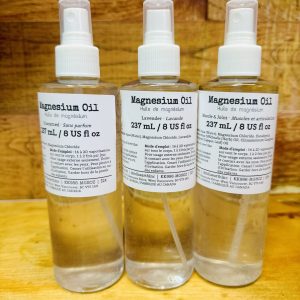
One of the things I love most is combining forces. When I make a horse chestnut salve for tired joints, I like to blend in other infused oils to create a double-powered salve. And of course, my favourite thing to do is whip it all up with magnesium into a magnesium body butter. Whipped into submission, as I like to say!
Walk slowly and notice
As you walk through nature and the parks this week, slow down. Be observant. Notice what is growing and what is falling, and ask yourself the deeper questions: why do I see this here, and why now? As the weather cools, our bodies crave more warmth, from warming teas on the inside to rich oils and salves on the outside. Nature always seems to offer exactly what the season asks for.
Happy foraging,
Katerina
If foraging is not for you this year, our magnesium body butters and oils are handmade in small batches right here in West Vancouver. Visit the shop.