Oil Pulling, Powdered Toothpaste & Nano-Hydroxyapatite Explained Simply
Modern dentistry is a gift when we truly need it. It relieves pain, treats infection, and saves teeth.
But most families would prefer to prevent problems instead of experiencing the stress, expense, and discomfort of emergency dental work.
At Mila Earth, we believe in strengthening the terrain first.
Instead of waiting for breakdown, we focus on creating a nourishing, mineral-rich oral environment that supports resilience over time.
This approach isn’t anti-dentist.
It’s pro-prevention.
Let’s break down how these tools work together in a simple, easy-to-understand way.
The Mouth Is a Living Ecosystem
Your teeth are not inert porcelain.
They are living mineral structures bathed in saliva, influenced by hormones, blood sugar, nutrition, stress, and the oral microbiome.
When we support:
• Mineral balance
• Healthy bacteria
• Stable blood sugar
• Fat-soluble vitamins
• Proper saliva flow
We change the entire environment of the mouth.
That’s the foundation of reparative oral care.
1. Oil Pulling – Microbiome Support
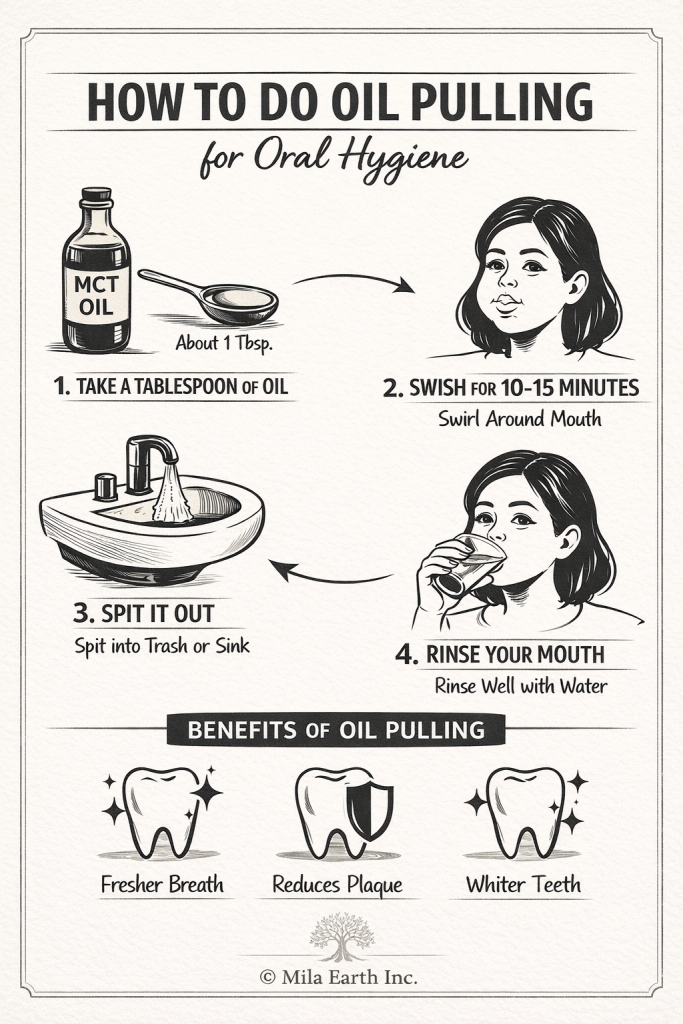
Oil pulling is a traditional practice involving swishing coconut or MCT oil in the mouth for 5–15 minutes.
What it may do:
• Mechanically reduce harmful bacteria
• Disrupt biofilm accumulation
• Support fresher breath
• Calm gum irritation
• Reduce plaque formation
Oil pulling works mechanically — it helps loosen debris and may bind to lipid-coated bacteria during swishing.
It is not a replacement for brushing.
It is a supportive practice that helps reduce bacterial overgrowth and reset the oral environment.
Consistency matters more than intensity.
2. Nano-Hydroxyapatite – Enamel Support
Hydroxyapatite is the primary mineral your enamel is made of.
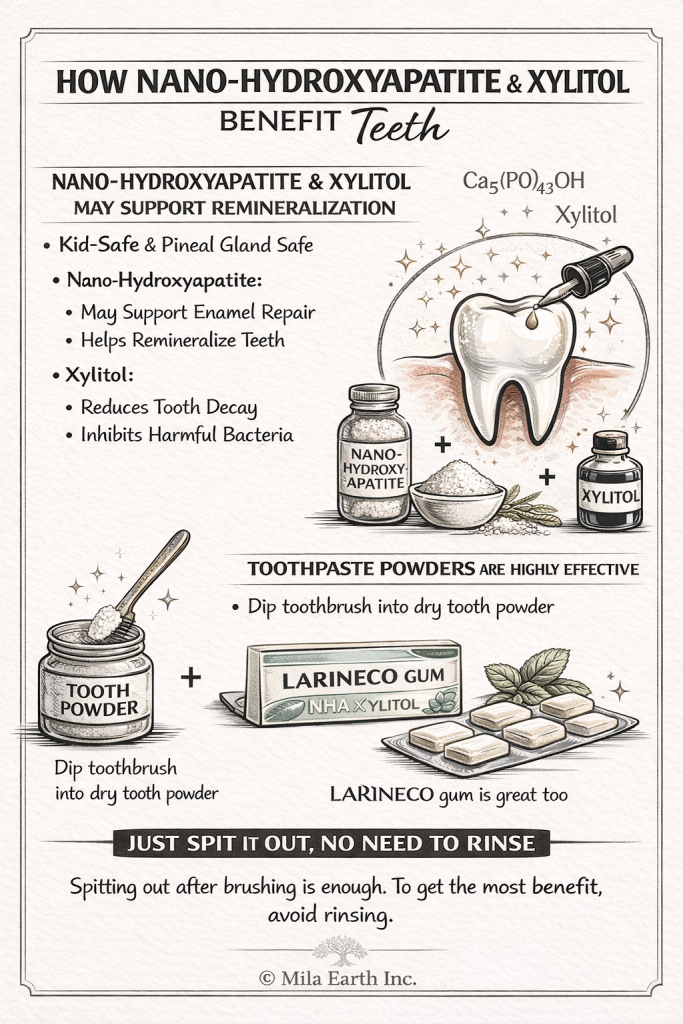
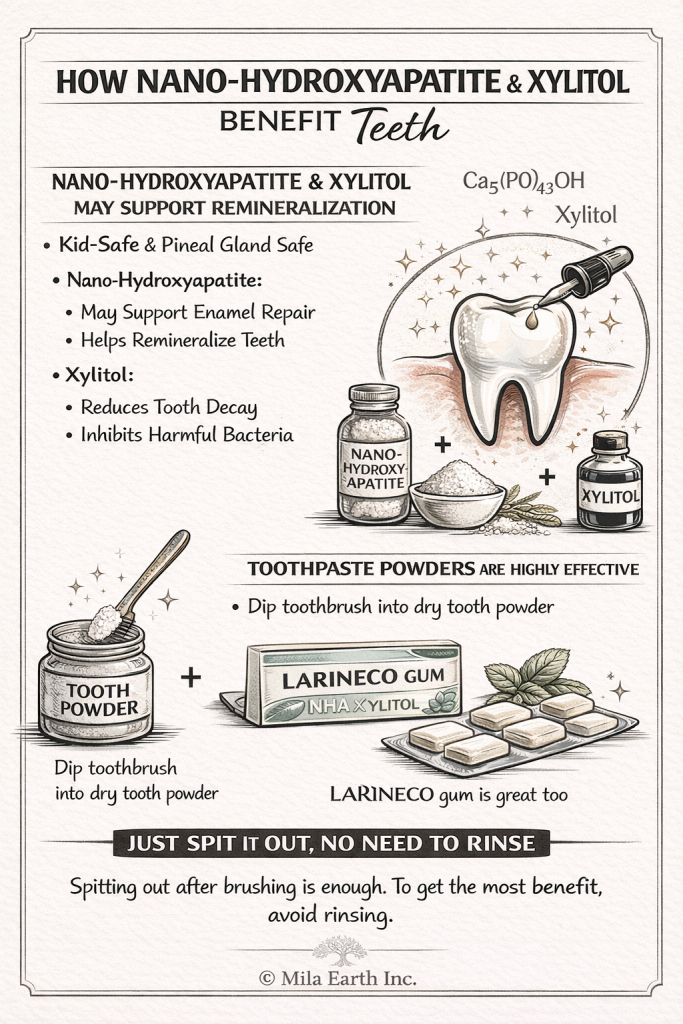
Nano-hydroxyapatite (nHA) is a biomimetic form that:
• Resembles natural enamel structure
• Can support remineralization of early enamel damage
• May reduce sensitivity
• Helps smooth enamel surface
Unlike harsh abrasives, nHA works by supplying the same mineral building blocks teeth are naturally composed of.
Studies show it can support enamel repair in early-stage demineralization and is considered safe for children when used properly.
This makes it a powerful component of natural mineral-based toothpaste powders.
3. Powdered Toothpaste – Concentrated Mineral Delivery
Traditional toothpaste often includes:
• Foaming agents
• Artificial dyes
• Preservatives
• Unnecessary fillers
Powdered toothpaste formulas:
• Deliver concentrated minerals
• Avoid excess stabilizers
• Reduce unnecessary additives
• Provide a clean ingredient profile
Using a dry brush dipped into powder allows direct contact between minerals and enamel.
And here’s an important tip:
After brushing, spit — don’t aggressively rinse.
Allowing minerals to sit on the surface increases contact time and supports remineralization.
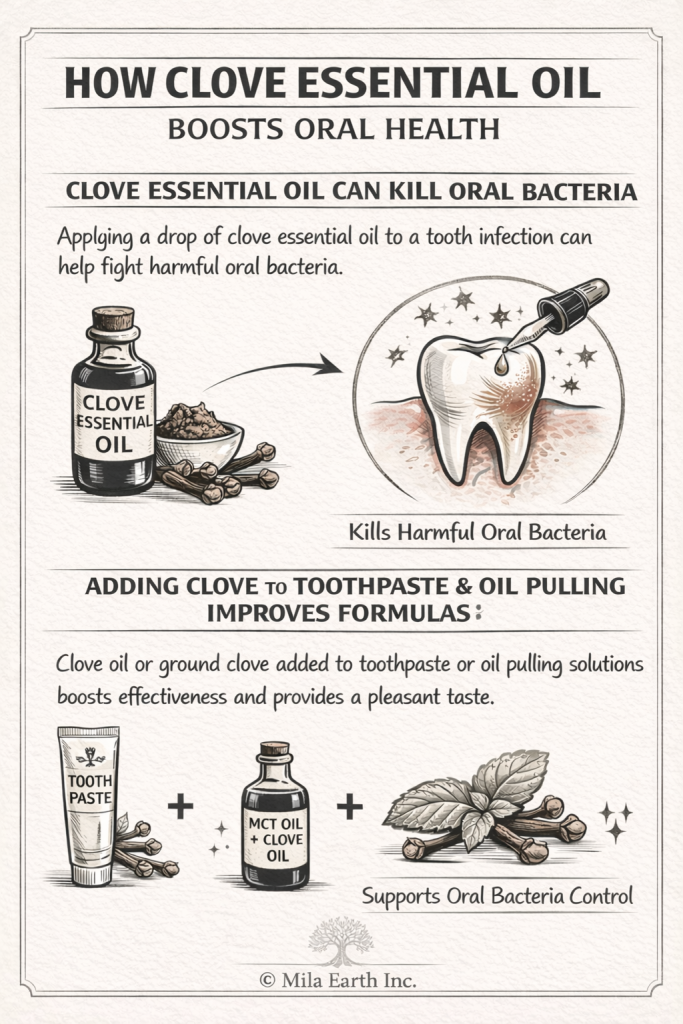
4. Clove – Traditional Botanical Support
Clove has been used historically in dentistry because it contains eugenol, a compound with:
• Antimicrobial properties
• Mild analgesic properties
• Anti-inflammatory support
Dentists have used eugenol in temporary dental materials for decades.
When properly diluted and used occasionally, clove may help support bacterial balance and calm minor oral irritation.
It is not a substitute for treating infection — but it is a valuable traditional botanical support tool.
Internal Nutrition: Where Real Change Happens
Topical support matters.
But internal support is foundational.
Oral health is directly connected to:
• Blood sugar regulation
• Mineral intake
• Protein consumption
• Fat-soluble vitamins
• Nervous system balance
Fat-soluble vitamins — especially Vitamins A, D, and K2 — play a central role in calcium metabolism and mineral direction.
They help the body:
• Place calcium where it belongs
• Support bone and enamel integrity
• Maintain immune balance in oral tissue
• Protect gum health
Traditionally, whole foods were emphasized to provide these nutrients.
High-quality cod liver oil naturally contains:
• Retinol (Vitamin A)
• Vitamin D
• Omega-3 fatty acids
When naturally derived, these nutrients work in synergy with the body’s mineral systems rather than existing as isolated synthetic compounds.
Desiccated liver and mineral-rich whole foods also contribute trace nutrients that modern diets often lack.
Nutrition builds the terrain.
Topical support maintains the surface.
They work together.
How It All Connects
When we combine:
Oil pulling → microbiome support
Nano-hydroxyapatite → enamel mineral replenishment
Xylitol (if included) → cavity-causing bacteria reduction
Clove → botanical support
Mineral-dense diet → internal substrate support
We create:
• A more stable oral microbiome
• Reduced acid-producing bacteria
• Stronger enamel surface
• Better saliva function
• Greater overall resilience
This is what we mean by “creating a reparative oral environment.”
Can This Reduce Dental Interventions?
Consistent preventative care can absolutely reduce:
• Cavities
• Sensitivity
• Gum inflammation
• Emergency visits
• Stress around dental care
Professional dentistry remains important when deeper issues arise.
But when we strengthen the oral environment proactively, we often reduce the need for crisis-based interventions.
Prevention reduces:
• Pain
• Anxiety
• Cost
• Disruption
That matters for families.
Education First
At Mila Earth, our foundation has always been education.
Yes, we create certain products.
But the purpose has always been:
• To save families money
• To reduce avoidable pain
• To lower anxiety
• To promote fundamental nutrition
• To empower community learning
We talk about these concepts in our blog, our newsletter, and in person at local events.
If you’re interested in deeper ingredient breakdowns, research summaries, and practical guidance:
Visit milaearth.com
Click Subscribe
Explore the blog
And if you’re local, come to an event or simply connect.
Community-based learning creates empowered families.
We learn together.
Always.
Related Reading
- Rowanberry: The Forgotten Antioxidant Berry Growing Around Us
- 🏋️♀️ How Athletes Are Using Magnesium for Recovery (And Why This Isn’t New)
- Everyone’s “getting sick” right now… but what if it’s not the flu?